






Léman 2025: from successful restoration to environmental vigilance
"When the wind changes, you have to know how to adjust your sails."
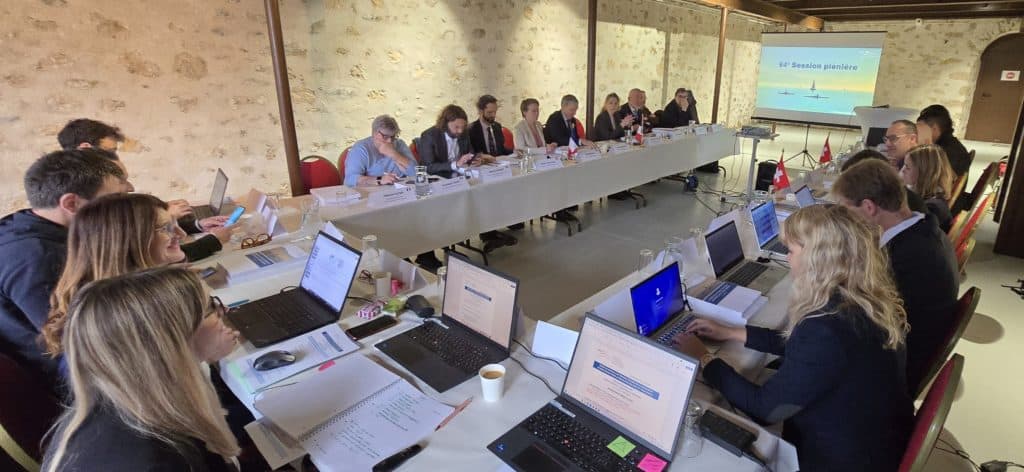
During our annual plenary session, the state of Lake Geneva's health was presented and discussed. The exchanges between government representatives and stakeholders were rich, fueled by scientific data, feedback, and a shared desire to preserve this common good in a sustainable manner.
After decades of effort, the restoration of its trophic quality is a recognized success. But this success opens up a new phase: that of ecological vigilance, in a context of climate change and diffuse and invisible pressures, such as micropollutants, microplastics, and the expansion of invasive alien species, such as the quagga mussel.
In the preamble to CIPEL's 2025 activity report, Secretary General Nicole Gallina shares a committed interpretation of this transition:
👉 Understand the new dynamics of Lake Geneva,
👉 Adapt our analytical and governance frameworks,
👉 Take collective action to sustainably preserve Western Europe's largest reservoir of drinking water.
📄 The preamble to the activity report is available in the article below 👇
On this occasion, we also presented the activity report, the CIPEL dashboard, and the annual scientific report, which together form the pillars of governance based on science, transparency, and cross-border cooperation.
🔗 Find our 2025 activity report online.
🔗 The annual scientific report and the 2025 dashboard are available in our library.
Because protecting Lake Geneva means anticipating, evolving, and acting together.
PREAMBLE FROM THE 2025 ACTIVITY REPORT
For three years now, I have had the privilege of delving deeper every day into understanding Lake Geneva and its watershed. The number 3, symbolizing dynamic equilibrium, reminds us that nothing is set in stone: understanding, adapting, and acting are the three forces that guide CIPEL in addressing the challenges facing Lake Geneva. In an ecosystem in transition, subject to new and changing pressures, this triad emphasizes that stability does not come from immobility, but from our collective ability to evolve in order to protect an essential common good: the waters of Lake Geneva.
The work of CIPEL has confirmed that 2025 marks a major turning point for Lake Geneva and for our institution. After several decades of effort, the trophic restoration of Lake Geneva is now a recognized success. Phosphorus concentrations have almost reached the levels set by CIPEL, values that were unattainable twenty years ago. This result is the fruit of exemplary cross-border cooperation, constant investment by scientists and local authorities, and consistent public policies.
This success highlights a new reality. Due to climate change and the spread of invasive alien species, the availability of phosphorus in the productive layers no longer follows the dynamics of the past. The historical objective, focused on reducing inputs, is no longer sufficient on its own to describe the evolution of the lake. Our analyses show the needto adapt our assessment framework, integrate new indicators, and rethink our understanding of Lake Geneva to ensure its long-term resilience.
For even if restoration is achieved, ecological vigilance remains essential. The challenges are shifting towards invisible, diffuse, and complex pressures: climate change, micropollutants, microplastics, new biological dynamics, and invasive species are now reshaping the lake's balance.
Like a sailor adjusting his sails when the wind changes, CIPEL was able to adapt its course in 2025. The move to new premises in the heart of international Geneva and on the shores of Lake Geneva is not simply a change of address: it embodies a strategic desire for roots, visibility, and openness. This closer proximity to our stakeholders and international players now allows us to carry the voice of Lake Geneva more widely.
We were thus able to present our actions and results to the United Nations on two occasions, during the sessions of the Water Convention, in panels dedicated to transboundary basin management and microplastics, as well as at the 22nd Euro-INBO Conference (international network of basin organizations) to share CIPEL's strategies on emerging micropollutants and microplastics. This international exposure has highlighted and reinforced a deep conviction: CIPEL's value lies in its science-based governance and more than sixty years of rigorously collected and annually analyzed data, which enable us to identify weak signals, anticipate upheavals, and understand the underlying dynamics of Lake Geneva.
This adaptation also involved some fundamental work: the overhaul of our framework documents, which had become essential, enabled us to clarify roles, modernize our governance, and adapt our operations to today's challenges.
The episode involving 1,2,4-triazole has highlighted, with undeniable clarity, the need to evolve in the face of emerging realities. Its sudden appearance, thanks to new analyses in Lake Geneva, has reminded us of the need to constantly adapt our tools and regulatory frameworks. It revealed a fundamental truth: Lake Geneva, the largest reservoir of drinking water in Western Europe, requires absolute vigilance in a rapidly changing climate. The quantity of water is only valuable if its quality is preserved. This observation has strengthened our determination to intensify the monitoring of emerging pollutants and to maintain a capacity for continuous anticipation in order to protect this vital resource in the long term.
Echoing point 3, understand, adapt, act, recommendation 2025 on wastewater overflows is a concrete illustration of this : it sheds light on the state of discharges, pushes us to adapt our practices in response to climate change, and establishes a common framework for preserving water quality. It expresses CIPEL's collective ability to evolve with the challenges of its time.
CIPEL Resolution 2024 on invasive alien species also reinforced the need for joint action to address one of the most urgent and complex challenges facing Lake Geneva. The quagga mussel, an engineer species capable of profoundly transforming the ecosystem and damaging drinking water, fishing, navigation, and energy infrastructure, requires a coordinated response across the entire basin. In 2025, CIPEL established a link with the Joint Commission for the Navigation Regulations of Lake Geneva to explore the integration of a requirement for cleaning and reporting boats changing waterways. This approach, already applied in several Swiss cantons, is a powerful lever for limiting the spread of invasive species. It illustrates a fundamental belief: no territory can respond to these threats alone. We must understand together, adapt together, and act together to protect Lake Geneva and other Swiss and French lakes that are still preserved in the long term. It is in this open and determined cross-border cooperation that our best chance of controlling biological invasions lies.
Reflecting on Lake Geneva's legal personality has also led us to consider another approach: viewing Lake Geneva not only as a resource, but as a being with its own needs. This approach reinforces our collective responsibility and reminds us that protecting Lake Geneva means preserving our shared future.
Hoisting the sails and adjusting them when the winds change requires good sailors. The year 2025 has shown that CIPEL can count on a united and committed team. I would like to express my sincere thanks to the Scientific Council, whose remarkable dedication nourishes our understanding of Lake Geneva; to the Operational Committee, which transforms this knowledge into concrete actions; to the Technical Sub-Commission Bureau, which sets the course and guides our priorities; and to the heads of delegation, who carry the necessary decisions to the highest level. None of this would be possible without the immense, decisive, and often discreet work of my secretariat team, which coordinates, connects, and supports all of these efforts.
Finally, I would like to extend my warmest thanks to David Daguillon, Chair of the Technical Subcommittee, for his time, experience, energy, patience, and kindness. I would also like to extend my best wishes to Rémy Estoppey, Chair of CIPEL, and wish him all the best in his new adventures as a retiree.
Nicole Gallina, Secretary General of CIPEL

